December groceries in Canada: budget the normal month and the holiday extra separately
$350. That is the holiday extra in one published worked example: a household that normally spends $800 a month on groceries watches December arrive at $1,150, and the increase is not a failure of discipline. It is a second, seasonal grocery bill, turkey, baking and extra guests, hiding inside the first one. Households that budget December as a single number argue with the wrong bill all month. Split it, and each half gets the tactics that actually work on it.
Two bills hiding in one month
The split is simple. Your normal month, the milk, eggs, weeknight dinners and school lunches you would buy in any month, stays a need and keeps its usual budget. Everything December adds on top, the bird, the baking, the hosting, the treats that only exist this month, is a separate line with its own cap, decided in November while you are calm. The example above puts it at $350 on an $800 base. Your number will differ, but the discipline is the same: the extra is a want with a ceiling, not an overflow that soaks into the regular budget and makes January's grocery spending look mysteriously virtuous by comparison.
The split also protects the normal month. When the two bills are merged, a big holiday shop early in December eats the money meant for ordinary food later in the month, and the last week gets quietly miserable. Two lines, even in a notebook, stop the feast from spending the groceries.
What a holiday dinner actually costs, measured
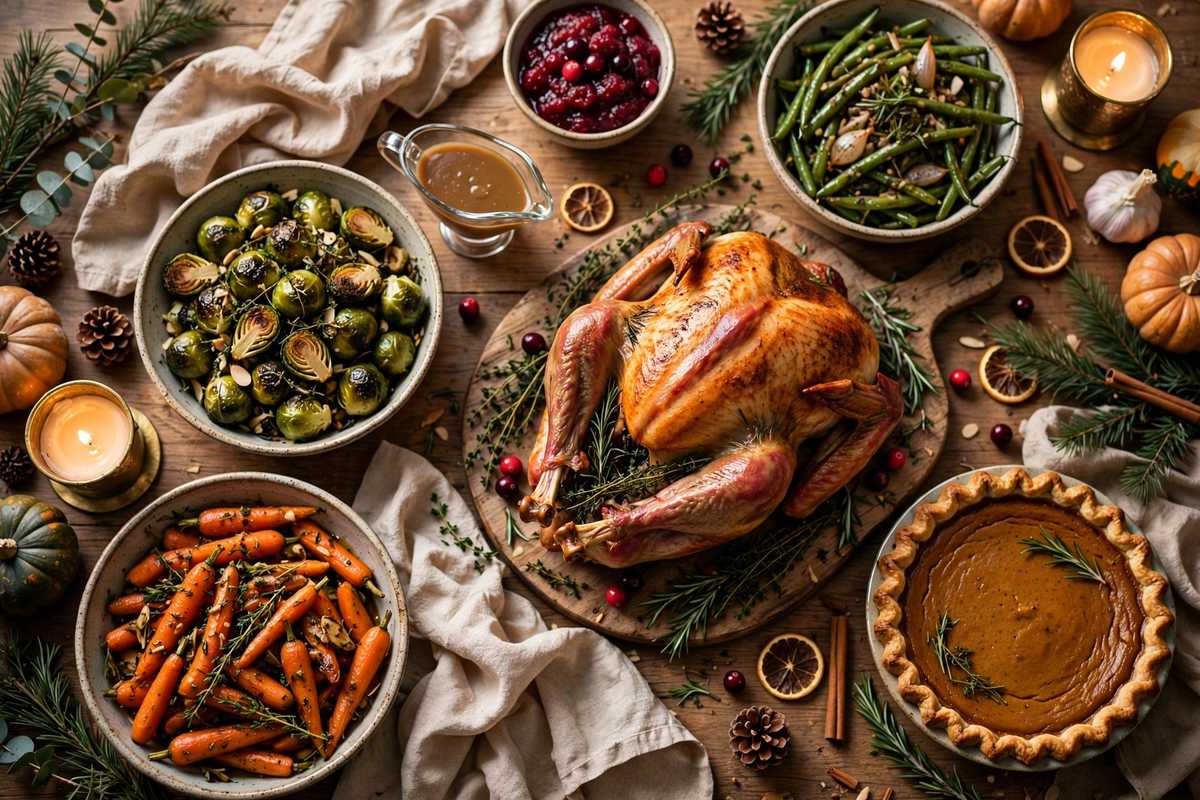
Flyer tracking across Canadian chains put numbers on the centrepiece meal at Thanksgiving 2026, the most recent measured holiday when this was written. The dinner core for eight, a whole turkey, cranberry sauce, stuffing mix, sweet potatoes and a pumpkin pie, came to $51.33 at median flyer prices, with the turkey at a median of $2.49 a pound. Adding potatoes, vegetables, rolls, butter and gravy brought the full dinner for eight to an estimated $72 to $91. Two lessons ride on those figures. First, the turkey dominates: on a 12 pound bird, every 25 cents a pound is $3, so the bird's flyer week matters more than every other saving on the table combined. Second, shopping each measured item at the chain with the lowest flyer price would have cut the core from $51.33 to $32.98. December prices will differ from Thanksgiving medians, and no December flyer prices had been published when this guide was written, so treat these as the shape of the cost, not a promise about this year's flyers.
Stage the extra across December flyer weeks
Holiday staples have a flyer rhythm that rewards patience in November and decisiveness in December. Before Thanksgiving, 19 chains advertised whole turkey. By early November, one did, and cranberry sauce and stuffing mix had left the flyers entirely. They return with the December flyers. Buying the seasonal shop in the gap, at full shelf price in mid November, is the most expensive way to do it. The staged version runs like this:
- Late November: write the holiday menu and the extra list, and set the cap. Buy nothing seasonal yet unless a genuine sale appears.
- First December flyer weeks: buy the frozen turkey at a loss leader price while sizes are well stocked, plus the shelf stable list: flour, sugar, chocolate chips, stuffing and gravy mixes, canned goods, crackers and frozen appetizers and vegetables.
- The week before: fresh produce, bakery items and dairy, bought against the menu you already own the staples for.
- All month: let loyalty points carry a planned slice. Points collected all year in programs such as PC Optimum, Scene+ and Moi are worth the same in December as in June, but December is when a points redemption replaces the most cash.
One adjustment keeps the plan honest: build the menu around the flyers where you can. If ham is the protein on deep discount in your flyer week and turkey is not, the menu that bends saves more than the menu that insists.
The worked example, split properly
Take the published example household: an $800 normal month and a $350 holiday extra, $1,150 in total. Run through the split, the extra divides into roughly $90 for the holiday dinner itself, using the measured $72 to $91 range for eight, about $120 of baking and pantry stock bought in the first December flyer weeks, about $80 of drinks, snacks and hosting extras, and a $60 buffer for the forgotten item and the extra guests who confirm late. The normal $800 never moves. If the extra threatens to pass $350, the cuts come from its own lines, a smaller buffer, a bent menu, a points redemption, and not from the ordinary food budget for the last week of the month. The household that wants a smaller December does the work in the cap, in November, not in willpower at the till on December 23.
When the extra is not worth trimming
Some Decembers earn their extra. A house full of family that visits once a year, a first holiday in a new home, a table that includes neighbours who would otherwise eat alone: the cap exists to make those choices deliberate, not to forbid them. Set the cap higher on purpose, write it down, and let the split do its one job, which is keeping a chosen celebration from billing itself to the regular groceries and leaving January to sort out the confusion.
, Penny Hughes, Money Writer. Saving Desk