Freezing holiday leftovers in Canada: eat-first order, real storage windows, and what not to freeze
How much of the holiday dinner is still in your fridge on day four, and how much of it should be? A full holiday dinner for eight was estimated at $72 to $91 at Thanksgiving 2026 flyer prices, which means a table's worth of leftovers is a second grocery shop you have already paid for. The households that keep that value do one unglamorous thing: they sort the leftovers the same night, on purpose, instead of letting the fridge decide by decay.
The two hour clock starts at dessert
Alberta Health Services puts the first rule plainly: refrigerate all leftovers within two hours of serving, and do not serve food that has sat at room temperature longer than that. The danger zone behind the rule runs from 4 degrees to 60 degrees Celsius, the range where bacteria multiply. Cold food belongs at 4 degrees or lower. One Canadian temptation gets a direct warning in the guidance: do not use a porch or garage as a second fridge. Winter air feels cold enough, but temperatures swing with sun and wind, and wildlife has its own interest in your turkey.
Eat first, freeze tonight, skip freezing: the sort
- Clear and cool. As the meal ends, take the stuffing out of the bird and store it separately from the meat. Slice, quarter or debone the turkey so it cools faster, and divide everything into small, shallow containers rather than one deep pot, so the centres chill quickly.
- Mark the eat first pile. Gravy goes here, with the shortest window of anything on the table, along with whatever your household will genuinely eat in the next two days.
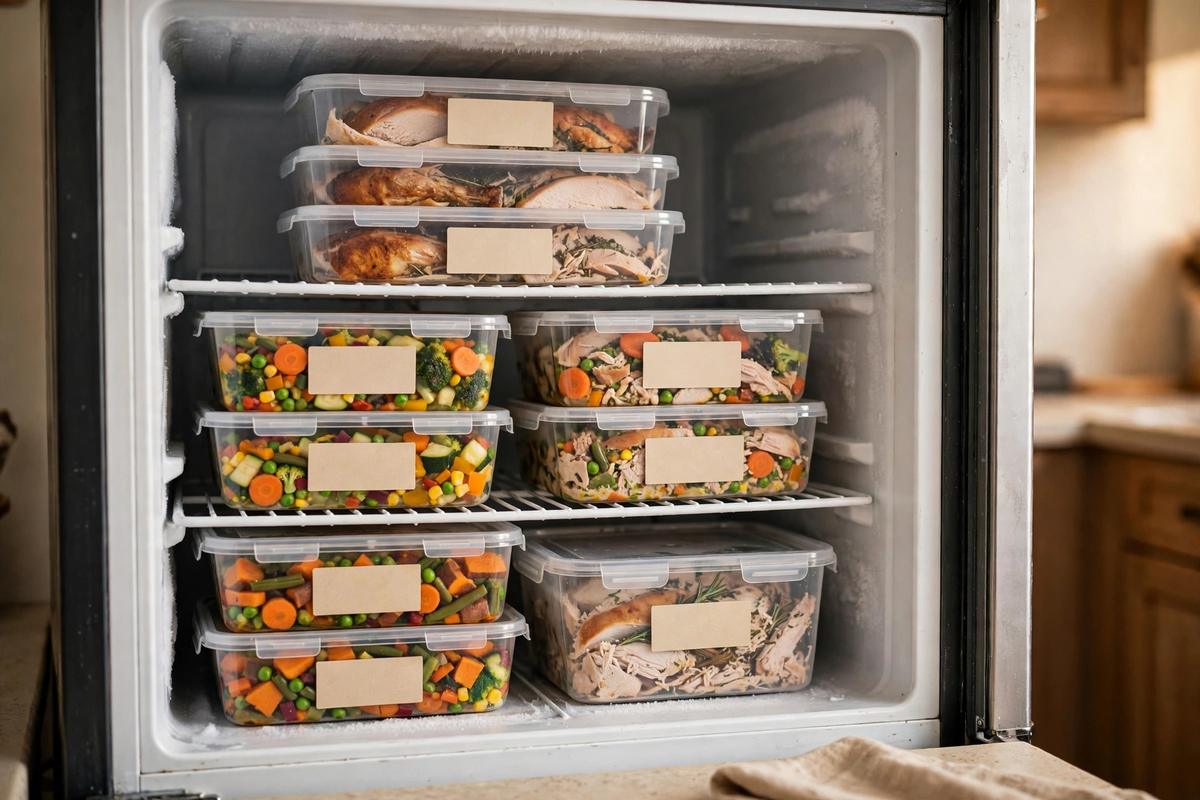
- Freeze the rest tonight. Anything that will not be eaten within three days should be frozen right after cooking, portioned into meal sized amounts, wrapped tightly or sealed in airtight containers, and labelled with the date.
- Skip the freezer for texture casualties. Milk and cream based dishes are not recommended for freezing; they stay safe but come back separated and grainy. Leafy salads belong in the eat first pile or the compost, not the freezer.
- Reheat once, properly. Leftovers go back to at least 74 degrees Celsius before serving.
Success looks like this: by the end of the holiday night, the fridge holds two days of planned meals in shallow containers, the freezer holds labelled portions with dates, and nothing is sitting in a roasting pan under foil waiting for a decision that gets worse every day.
The windows, with the disagreement shown
| Leftover | Fridge window | Freezer note |
|---|---|---|
| Turkey, ham, beef | 2 to 3 days on Alberta Health Services guidance; 3 to 4 days on the Love Food Hate Waste Canada chart | Freeze the same night for best quality |
| Stuffing | 2 to 3 days on Alberta Health Services guidance; 3 to 4 days on the chart | Freezes acceptably, portioned flat |
| Gravy | 1 to 2 days | Freeze in small containers if it will not be used in two days |
| Mashed potatoes | 3 to 5 days | Freezable, texture softens |
| Cranberry sauce | About 2 weeks | No rush; the longest window on the table |
Canadian sources genuinely disagree on the meat window, and this guide will not pretend otherwise. Health Canada guidance, as reported in Canadian food safety coverage, puts most leftovers at 3 to 4 days in the fridge. Alberta Health Services, writing for the holiday table specifically, says leftover meat, stuffing and gravy should be eaten within two to three days. The cautious reading costs nothing: plan meals against the two to three day window, and treat anything beyond it as a freeze it or lose it decision that should already have been made on the first night. Frozen at minus 18 degrees, leftovers stay safe because bacteria cannot grow; quality is the real deadline, with best flavour inside 2 to 6 months.
How to freeze so it reheats well
Cool food thoroughly before freezing to limit condensation, freeze in the portion sizes your household actually eats, and leave the rich, cream based sauces out of the freezer plan entirely. A labelled portion of turkey frozen on the holiday night becomes a January soup, a curry, or a pie filling with no shopping attached. The same portion discovered unlabelled in March becomes a guess, and guesses get thrown out, which is the $72 to $91 dinner leaking away one container at a time. The sort takes about twenty minutes on the night. It is the cheapest grocery work of the whole season.
, Penny Hughes, Money Writer. Saving Desk