Markdown and clearance timing: the reduced-price playbook
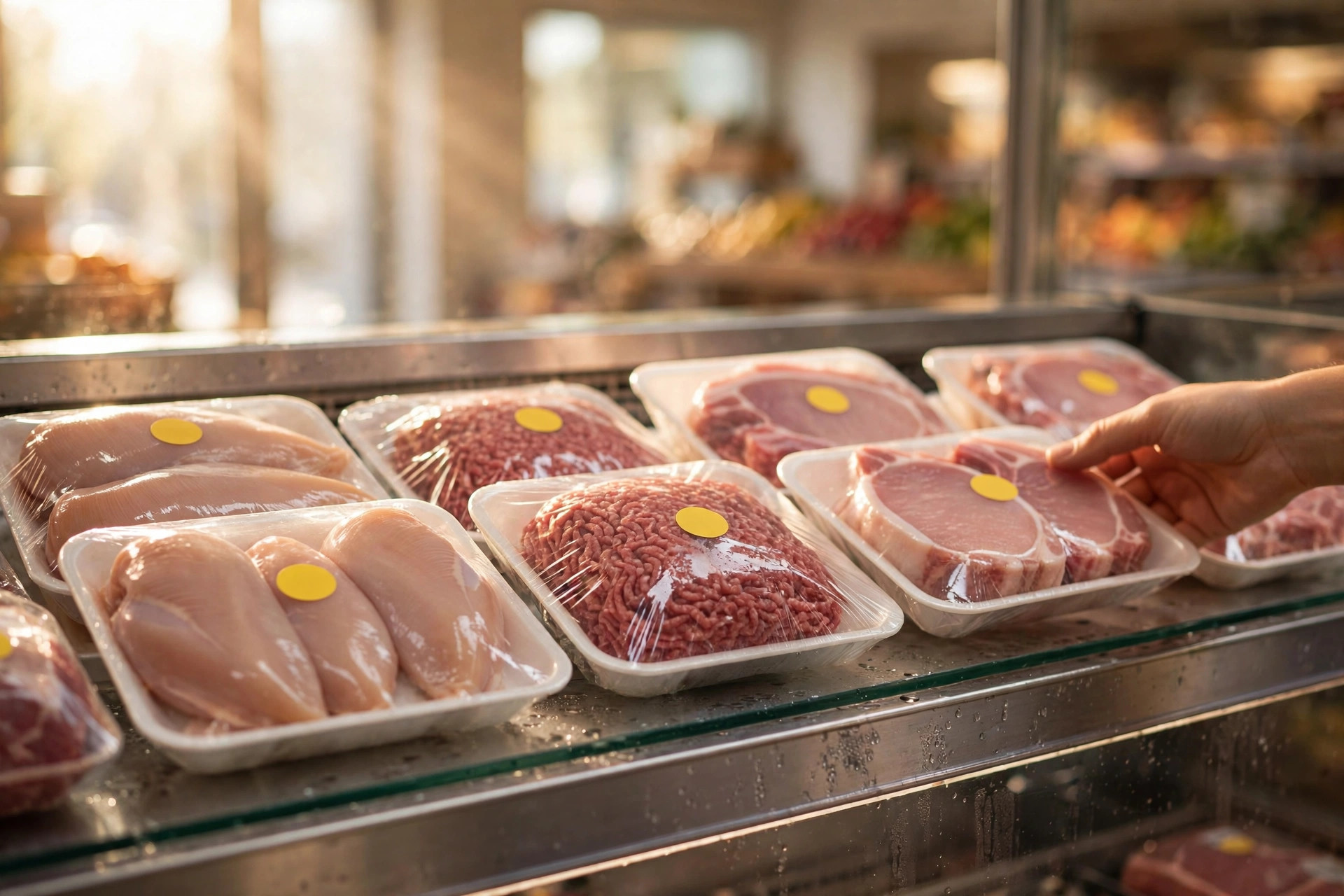
Every day, grocery stores mark down meat, dairy, bakery, and produce that is approaching its best-before date — often at 25% to 75% off depending on the hour. This food is perfectly good; the store just can't sell it at full price tomorrow. A little timing and a 60-second triage turn the markdown rack into one of the cheapest protein sources in the store.
Where markdowns live in North American stores
Every chain handles markdowns differently, so start by learning your own store's system: most mark down items nearing their best-before date with a clearance sticker, and many keep a dedicated reduced rack near the meat or produce section — when in doubt, ask staff where the marked-down items live. Then there's the app route: Flashfood, a free app where partner stores list near-expiry groceries at up to 50% off. Browse the deals, pay in the app, and pick up your order from the store's designated Flashfood zone. Flashfood partners with Loblaw-banner stores in Canada and several US chains, so check whether your regular store is listed before you count on it.
When to look (and why timing beats luck)
Markdown schedules vary by store — the honest answer is that no universal timetable exists — but the pattern is consistent: markdowns happen in waves. Items expiring the same day get marked down early (often at just ~25% off, but with the widest variety), while the deepest cuts land later, when the store would rather sell at a steep discount than throw the food away. Don't shop the last five minutes before closing, though: items past their use-by date get pulled for waste, and the best stock goes first.
Your highest-value move is to ask. Store managers and department staff know exactly when their markdowns happen — ask once and you'll know the real schedule for your store.
The 60-second markdown triage: freeze, cook now, or skip
The deal is only a deal if the food gets used. Run this check on every markdown item before it goes in the cart:
- Check the date. If it's a "use by" date, it must be cooked, frozen, or eaten by that day. "Best before" dates are about quality, not safety — use your eyes and nose.
- Freeze: meat, poultry, fish, bread, and most cooked items go straight into the freezer the same day. Look for the "suitable for freezing" icon on the package. Portion it first, label it, done. (See our freezer basics guide for the full system.)
- Cook now: if it's dinner today or tomorrow, buy it and plan the meal around it. Markdown meat plus pantry staples is the cheapest dinner formula there is.
- Skip: if you can't freeze it and you can't cook it within the date, leave it. A 50%-off chicken breast you throw away on Thursday cost you 100% of its price.
What success looks like: markdown meat in the freezer within hours of buying it, tonight's dinner planned around a markdown item, and nothing close-dated sitting in the fridge on hope.
Make it a habit, not a hunt
You don't need a special markdown trip. Just check the reduced section every time you're in the store anyway, even when nothing on your list is marked down — the regular finds (cooked meats, chicken thighs, bakery) show up whether you planned for them or not. And watch the calendar: around Christmas and New Year, stores that close for a day or two push hard to clear anything expiring over the closure, so the weeks before a holiday are markdown season. That's when a cleared freezer and a little planning turn deep discounts into weeks of meals.
FAQ
Is reduced-price food safe? Yes, if you respect the dates: freeze or cook "use by" items the same day, and use judgment on "best before" produce and dairy. When in doubt, freeze it or skip it.
Should I plan meals around markdowns? Plan the core meals, then let markdown finds upgrade or swap them. A planned-flexible approach beats both rigid meal plans and impulse markdown hauls.